Stump Grinding in Sebastian, FL
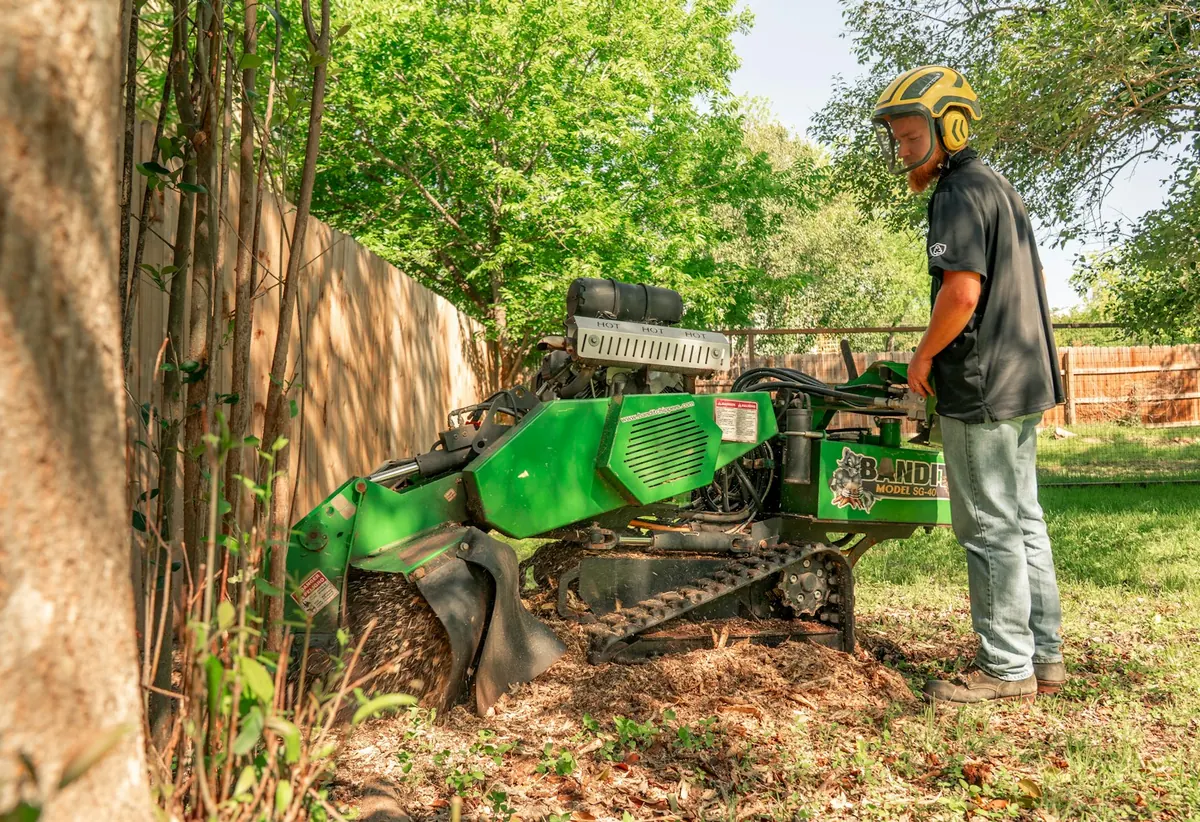
The tree's gone, but the stump is still there — a tripping hazard in the yard, an obstacle for the mower, a magnet for termites, and the one thing keeping that corner of your property from actually being usable. Grinding it out finishes the job.
Why Grind a Stump Instead of Leaving It?
- Pests. In Florida, a rotting stump is an open invitation — termites, carpenter ants, and wood-boring beetles set up in the stump and don't always stay there.
- Regrowth. Many species keep sending up shoots from a live stump and its roots for years. Grinding kills the cycle.
- Usable ground. You can't mow over it, build on it, or plant through it. Ground out, the spot becomes lawn again.
- Looks and safety. A stump in the middle of the yard reads as an unfinished job — and finds shins and mower blades in the dark.
How Grinding Works
A stump grinder is a machine with a carbide-toothed wheel that chews the stump into mulch, working from the top down to below ground level — typically far enough down that you can lay sod, replant grass, or prep the spot for a new tree or a project. The grindings can be raked into the hole as fill, used as mulch, or hauled away. Compared to digging a stump out with an excavator, grinding is faster, cheaper, and doesn't leave a crater in your yard.
What It Costs
Stump grinding is usually the most affordable part of tree work. Price scales with the stump's diameter, the species and age of the wood, how many stumps there are, and access — a stump in an open front yard is quicker than one behind a pool cage. Multiple stumps in one visit almost always cost less per stump. As with everything else, the estimate is free and the price is set before the machine comes off the trailer.
Pair It With a Removal
If a tree is coming down anyway, having the stump ground during the same job is the efficient move — the crew and equipment are already on site. See tree removal for how that side works, or land clearing if you have a whole lot's worth of trees and stumps to deal with.